


- Home /
- Paediatric Dentistry /
- Tongue Guards and Habit Appliances
Tongue Guards and Habit Appliances
Tongue Guards & Habit-Breaking Appliances
Persistent thumb sucking, tongue thrusting, finger sucking or pacifier dependence can permanently affect a child’s developing teeth, jaws and bite if they continue past ages 3–4. At Dentistar Dental Clinic in Strovolos, Nicosia, we design and fit gentle, child-centred habit-breaking appliances that work with — not against — the child’s motivation.
Habits We Can Help With
- Tongue thrust — pushing the tongue forward against or between the teeth when swallowing or at rest
- Thumb sucking continuing past age 3–4
- Finger sucking (often the index or middle finger)
- Persistent pacifier use past age 3
- Lip biting or lip sucking
- Tongue posture problems contributing to open bite
Why These Habits Cause Problems
- Tongue and finger habits exert subtle, constant pressure on the teeth and developing jaws. Over months and years, that pressure can produce:
- Front teeth that flare forward ("buck teeth" appearance)
- An open bite — a visible gap between upper and lower front teeth when biting down
- A narrow upper jaw — sometimes with a crossbite
- Speech difficulties — lisp, problems with "s", "t", "d" sounds
- Difficulty chewing, swallowing or breathing through the nose
- Mouth breathing habits that affect facial growth
Signs an Appliance May Help
- The habit has continued past age 4–5 despite gentle behavioural approaches
- You can see dental changes starting — flared front teeth, an open bite, a narrow upper jaw
- Speech issues that may relate to tongue posture
- The child is motivated to stop but cannot do it on their own
- The habit is interfering with school, sleep or social interaction
The Process — Step by Step
Assessment:
A friendly, no-pressure appointment where we examine the bite, the position of the teeth, and discuss the habit with the child and parent. We take photos to track progress over time.
Discussion with the child:
We never "surprise" a child with an appliance. We explain — in age-appropriate language — what the appliance is, why it helps, and how it will feel. The child becomes part of the team rather than the patient on whom something is being done
Impression or digital scan:
Quick and comfortable. No anaesthesia needed.
Fitting:
The appliance is cemented (for fixed types) or fitted comfortably (for removable). The child usually adapts within 2–3 days.
Wear period:
Typically 6–12 months. Most children stop the habit within the first 2–3 months — the rest of the time stabilises the new pattern and lets any dental changes self-correct.
Removal & follow-up:
The appliance is removed in a quick, painless appointment. We continue monitoring at every check- up to confirm the bite is correcting itself — or, in more severe cases, coordinate with our orthodontics team for further treatment.
Why a Custom Appliance Is Better Than Over-the-Counter Solutions
- Custom-sized to your child's mouth — comfortable, doesn't hurt the gums
- Doesn't restrict eating or normal speech
- Made from biocompatible, child-safe materials
- Designed by a paediatric dentist who understands developing dentition
- Combined with behavioural support — not just a "punishment" device
- Far more effective than bitter creams, gloves or generic appliances
We Always Try Behavioural Approaches First
- An appliance is never our first response — and it's never used as a punishment. Before any appliance, we work through
- Age-appropriate explanation of why stopping matters (involve the child as a partner)
- Positive reinforcement and reward charts
- Addressing the emotional triggers (tiredness, stress, boredom)
- Gentle reminders rather than scolding
- Avoiding bitter creams or gloves — these often cause stress without solving the habit
- Most children respond to these approaches alone — especially when they're emotionally ready to stop. An appliance is reserved for cases where behavioural strategies haven't worked and dental changes are starting to appear.
Types of Habit-Breaking Appliances
Fixed Tongue Crib
The most commonly used habit appliance. Two small stainless-steel bands fit on the upper molars, connected by a wire arch that includes a small vertical “fence” or “crib” behind the upper front teeth. The fence is a gentle reminder to the tongue not to push forward — and it makes the thumb or finger uncomfortable to rest behind the front teeth.
- Best for:
- Tongue thrust
- Thumb or finger sucking
- Cases where 24/7 wear is needed
Quad Helix
A fixed appliance designed to gently widen a narrow upper jaw while also discouraging the habit. Useful when both jaw expansion and habit-breaking need to happen at the same time.
Bluegrass Appliance
A fixed appliance with a small roller in the centre that the child can spin or play with using the tongue. The roller provides a positive substitute behaviour — the child plays with it instead of sucking their thumb. Particularly successful in younger children who respond well to interactive solutions.
Tongue Spurs / Rakes
Small wire spurs added to a fixed retainer or to the back of the bands. Slightly uncomfortable when the tongue or finger pushes forward, providing a constant behavioural reminder. Used in cases where other approaches haven’t worked.
Combining with Myofunctional Therapy
For tongue thrust in particular, the appliance is often combined with myofunctional therapy — a series of simple tongue and lip exercises that retrain the correct swallowing pattern. This combination is significantly more effective than either approach alone, and gives long-lasting results. We coordinate this where needed.
Cases
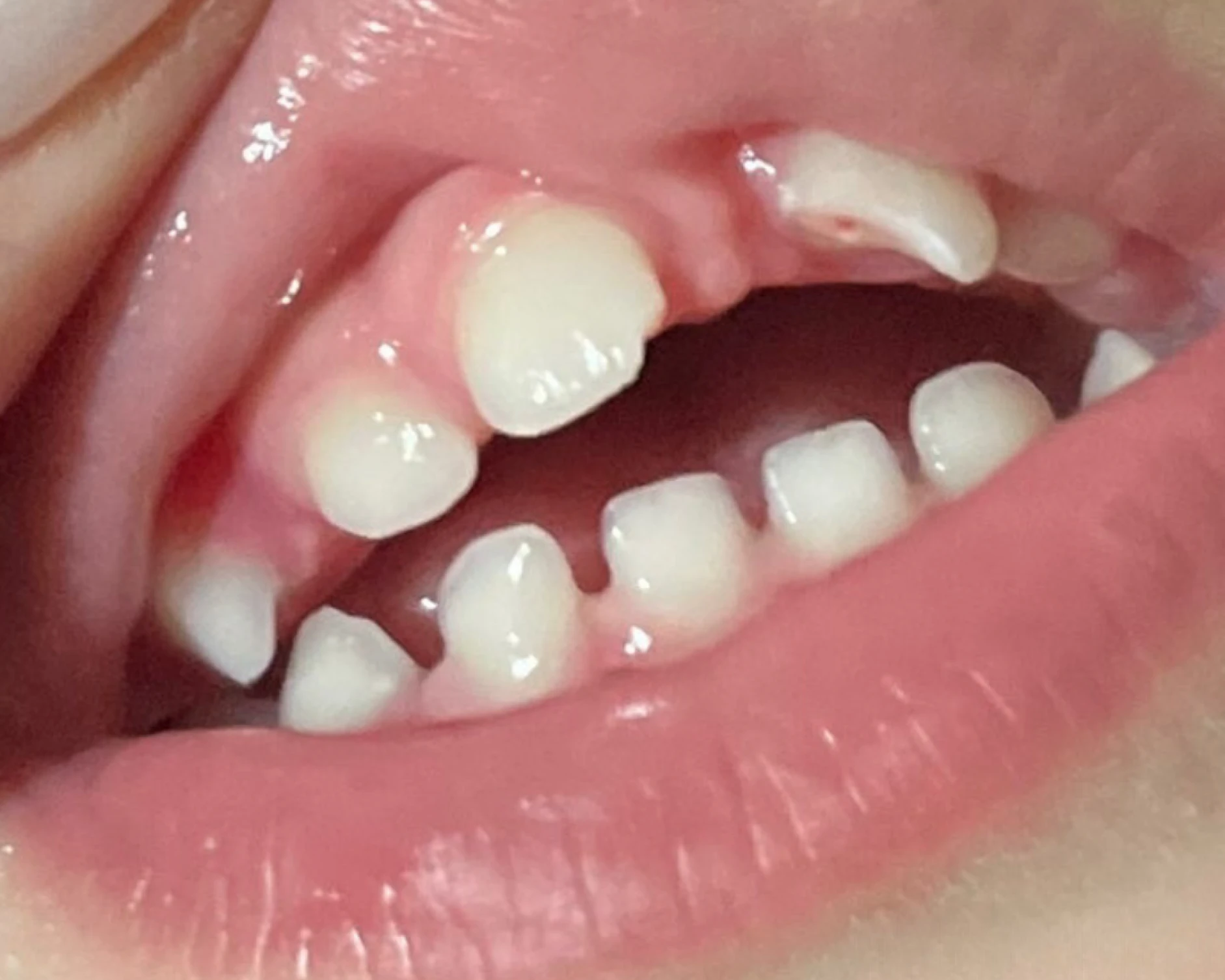
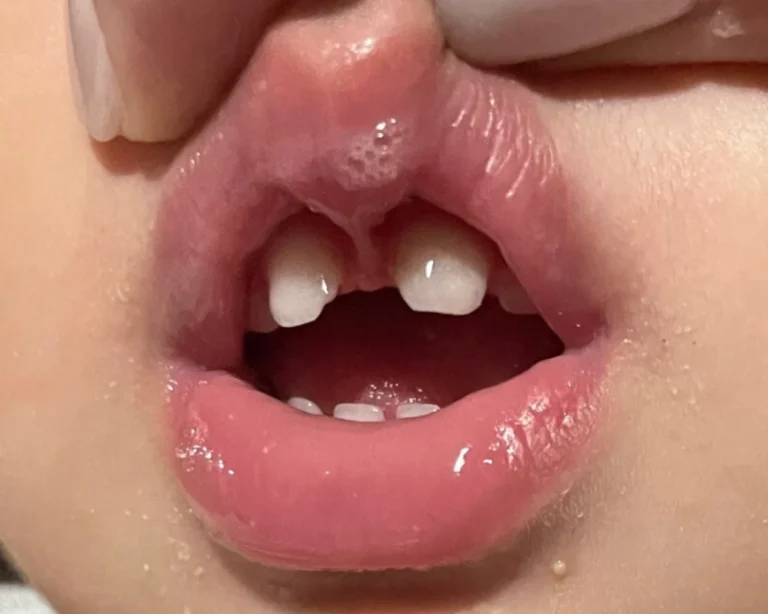
Everything You Need to Know
Frequently Asked Questions (FAQ)
My child still sucks their thumb at age 5 — what should I do?
First, try gentle behavioural approaches: positive reinforcement, reward charts, age-appropriate explanation of why it matters, and addressing any emotional triggers. If the habit continues past age 4–5 and dental changes are starting to appear (flared front teeth, open bite), a habit-breaking appliance can be highly effective. We never use punishment — we work with the child’s motivation as a team.
How long will my child need to wear the appliance?
Typically 6–12 months. Most children stop the habit within the first 2–3 months. The remaining time stabilises the new pattern and lets the bite begin to self-correct.
Will the appliance hurt my child?
Not at all. The fitting is painless and most children adapt within 2–3 days. There may be a brief feeling of “something new” in the mouth, but it doesn’t hurt and doesn’t interfere with normal eating or speaking.
Will the open bite close on its own once the habit stops?
Often, yes — especially in younger children. The bite frequently self-corrects in the months after the habit stops, while the appliance is still in place. For more severe or older cases, follow-up orthodontic treatment may be needed.
Can my child eat normally with the appliance?
Yes — completely. Some foods (very hard, sticky or stringy) are best avoided to protect the appliance, but otherwise the child can eat normally. We give you a full list of “yes/no/maybe” foods at the fitting.
How is this different from braces?
Braces straighten existing teeth into new positions. A habit-breaking appliance stops the habit that’s causing the problem, so the teeth can either self-correct or stop drifting further out of position. Sometimes braces are still needed afterwards — but the appliance treats the cause, not just the symptom.
Will my insurance cover the appliance?
It depends on your provider. Some cover habit appliances under preventive orthodontic care. We provide detailed receipts and clinical documentation for reimbursement.
Ready to Book Your Appointment?
Contact us today to schedule your visit and take the first step toward a healthier smile.