


- Home /
- Oral Surgery /
- Gummy Smile and Crown Lenghtening
Gummy Smile and Crown Lenghtening
What Is a Gummy Smile?
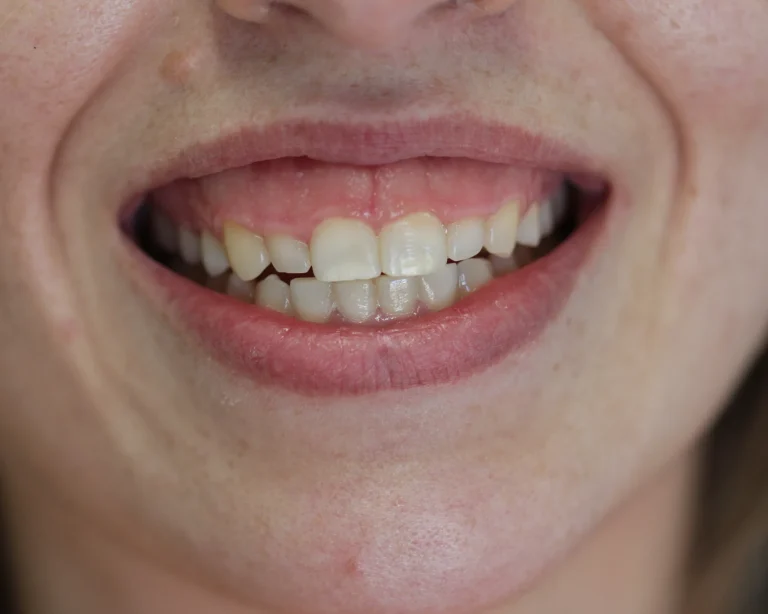
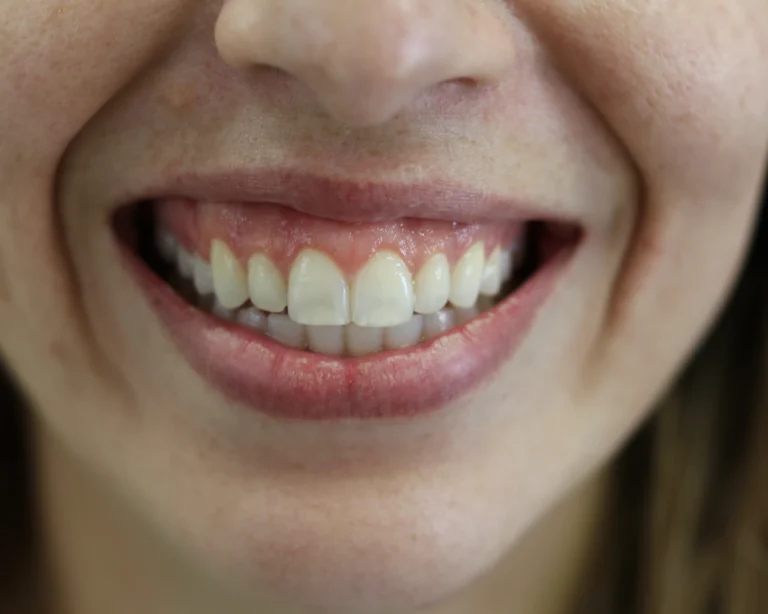
A “gummy smile” (excessive gingival display) is when more than 3 mm of gum tissue shows above the upper teeth during a full smile. While it’s not a medical problem, many patients feel self-conscious about it — and for some it makes the teeth look short, even when they’re a perfectly normal size.
Two Closely Related Procedures
Crown lengthening and gummy smile correction often overlap — both involve reshaping the gums(and sometimes the underlying bone) to expose more of the tooth’s natural structure. The difference is in the goal:
- Aesthetic crown lengthening / gummy smile correction — to improve the appearance of the smile
- Functional crown lengthening — to expose enough healthy tooth for a filling, crown or other restoration to be placed properly
At Dentistar, we approach both with the same surgical precision — but the planning and the conversation around each is tailored to its goal.
Diagnosis — Why It Matters
Choosing the right treatment depends entirely on diagnosing the right cause. At Dentistar, we usefull smile analysis (photography, video of dynamic smile, digital measurements) to identify whether your gummy smile is gingival, dental, skeletal, muscular — or a combination — before recommending any procedure.
Common Causes
Altered passive eruption (most common cause)
The gums failed to recede to their proper position as the teeth erupted, leaving the teeth partially covered by gum tissue. This is treated effectively with crown lengthening — sometimes with bone reshaping (osteotomy).
Vertical maxillary excess
The upper jaw has overgrown vertically. In mild-to-moderate cases, crown lengthening and lip repositioning can improve the smile dramatically. In severe cases, orthognathic surgery may be considered.
Hyperactive upper lip
The lip lifts too high when smiling, exposing more gum. Treated with lip repositioning surgery or with periodic Botox injections.
Short upper lip:
Anatomically shorter lip showing more gum even at rest. Lip repositioning surgery may help.
Worn or short teeth:
Teeth that have lost length (from grinding, erosion or genetics) make gums look proportionallylarger. Crown lengthening + veneers or crowns restores ideal tooth proportions.
Crown Lengthening — In Detail
What Is a Crown Lengthening?
Crown lengthening is a precision surgical procedure that exposes more of a tooth’s natural crown by carefully removing excess gum tissue, and — where needed — reshaping the bone underneath. It is one of the most rewarding treatments in dentistry: results are immediate, dramatic and permanent.
1) Aesthetic Crown Lengthening
Performed to improve the appearance of a gummy smile or short-looking teeth. Often combined with porcelain veneers, crowns or simply on its own when teeth are healthy and well-positioned.
- Best for:
- Aesthetic crown lengthening / gummy smile correction — to improve the appearance of the smile
- Functional crown lengthening — to expose enough healthy tooth for a filling, crown or other restoration to be placed properly
- Typical extent:
- Usually 4–10 upper front teeth (canine to canine, or premolar to premolar)
- Performed in a single appointment under local anaesthesia
- Duration: 60–90 minutes
2) Functional Crown Lengthening
Performed when there isn’t enough healthy tooth structure visible above the gum line to support a restoration. Without crown lengthening, a deep filling or fractured tooth might be considered unrestorable — and the only alternative would be extraction.
- Best for:
- Teeth with deep decay extending below the gum line
- Fractured teeth where the break extends subgingivally
- Teeth where a previous crown or restoration has chipped near the root
- Pre-prosthetic preparation when more tooth must be exposed for a proper crown
- Establishing the "biological width" — the minimum healthy tooth height needed between the bone and the new restoration
- Typical extent:
- Usually focused on 1–3 teeth
- Almost always involves bone recontouring (osteotomy), not just gum reshaping
- Healing period of 6–8 weeks before the final restoration is placed
How Crown Lengthening Is Performed
Smile / restoration analysis and design:
Digital photography, smile video, periodontal probing of bone position and — for aesthetic cases — a digital wax-up showing the proposed new tooth shape. We design the final gum and tooth line before any surgery.
Local anaesthesia:
Painless numbing of the entire surgical area.
Gingivectomy (gum reshaping):
Using either fine surgical instruments or a soft-tissue laser, we precisely remove excess gum tissue along the planned new line. Laser-assisted gingivectomy offers a key advantage: it cauterises as it cuts, meaning less bleeding, faster healing and minimal discomfort.
Osteotomy (bone reshaping) — where indicated:
If bone needs to be reshaped (often the case in functional crown lengthening and in some aesthetic cases), a small flap is gently raised and a tiny amount of bone is contoured with a precision burr. This ensures we respect the "biological width" — the natural distance between the bone and the new gum margin, typically 2–3 mm — so the gums heal stable, healthy and at the new level.
Repositioning and suturing:
The gum tissue is repositioned at the new, more aesthetic level. Fine sutures are placed if needed (often dissolvable).
Post-op review:
We see you in 1–2 weeks for a follow-up, again at 6 weeks, and finally schedule any restorations (veneers, crowns, fillings) once the gums have stabilised
Why Bone Reshaping Is Often Needed
Many gummy-smile cases — and almost all functional crown lengthening cases — require bonereshaping along with the gum reduction. This is because:
- If we only trim the gum, it will grow back to its original position within weeks ("creeping back")
- There must be at least 2–3 mm of bone-free tooth above the bone level (the "biological width") to allow healthy gum attachment and prevent inflammation
- Without bone reshaping, restorations placed too close to the bone trigger chronic inflammation and bone loss
This is what separates a properly performed crown lengthening from a simple gum trim — and what makes the result permanent.
Laser-Assisted Crown Lengthening
Where the case allows, we use modern soft-tissue lasers to perform the gingivectomy portion ofcrown lengthening. The benefits:
- Minimal bleeding — the laser cauterises as it cuts
- Faster healing — many patients are back to normal within 48 hours
- Less post-op discomfort
- Often no sutures required
- Excellent precision in shaping the new gum line
In cases requiring bone reshaping, the laser handles the soft tissue and traditional surgical techniques are used for the bone, combining the best of both worlds.
Other Surgical Options for Severe Gummy Smile
Lip Repositioning Surgery
For patients whose gummy smile is caused mainly by a hyperactive or short upper lip. A small strip of tissue is removed from the inside of the upper lip and the lip is sutured to a lower position, reducing how high it lifts when smiling. Performed under local anaesthesia, typically lasting 45–60 minutes.
- Best for:
- Patients with hyperactive upper lip muscle activity
- Patients who don't want to rely on repeat Botox injections
- Mild-to-moderate gummy smile of muscular origin
Botox (Non-Surgical Alternative)
Small doses of botulinum toxin can be injected into the muscles that elevate the upper lip, reducing how high it rises when smiling. Effects last 3–6 months. A great option for patients who want to “test” a smile correction or who prefer a non-surgical approach. We coordinate Botox treatment where indicated; permanent solutions are surgical.
Orthognathic Surgery
For severe gummy smile caused by vertical maxillary excess (overgrowth of the upper jaw), the only definitive treatment is orthognathic surgery — repositioning of the upper jaw under general anaesthesia. This is performed in coordination with a maxillofacial surgeon and is reserved for severe, skeletal cases.
Combining Crown Lengthening with Other Treatments
Crown lengthening is rarely a stand-alone treatment in the smile zone — it’s the foundation that allows other cosmetic work to look its best. We often combine it with:
- Porcelain veneers or E.max no-prep veneers — for ideal final aesthetics
- Teeth whitening — performed after crown lengthening, before veneer fabrication
- Crowns — when teeth also have structural compromise
- Orthodontics — when tooth position needs correcting first
- Lip repositioning — for combined gingival and muscular causes
Every Smile Design at Dentistar that involves changing the gum line begins with this question: do we need crown lengthening to get the proportions right? If yes, it becomes the first step — everything else follows.
Healing & Aftercare
- Immediate Post-Op (First 48 Hours)
- Mild discomfort manageable with standard painkillers (paracetamol or ibuprofen)
- Ice packs to the outside of the cheek to reduce swelling
- Soft, cool diet — soups, yoghurt, smoothies, pasta
- Avoid hot food/drink and physical exertion for 24 hours
- Gentle brushing of unaffected areas only
- Saltwater or chlorhexidine rinses starting day 2
- First Week
- Soft diet continues
- Sutures (if any) removed at 7–10 days, or dissolve on their own
- Mild tenderness and sensitivity normal
- Brush carefully around the surgical site with a soft brush
- Brush carefully around the surgical site with a soft brush
- Weeks 2–6
- Gums settle into their new shape
- Return to normal brushing and flossing routine
- Restorations (veneers, crowns) — if planned — can usually be started at 6–8 weeks
- Final Aesthetic Result
- The full final result of the gum healing is visible at 8–12 weeks. Bone-level crown lengthening gives a permanent result; gum-only reshaping in inappropriate cases may show some recovery of tissue — which is why bone reshaping matters.
Risks & How We Minimise Them
- Temporary tooth sensitivity: common in the first few weeks, especially to cold; resolves on its own or with desensitising toothpaste
- Asymmetry: prevented through careful pre-op design and intra-op measurements
- Gum recovery ("creeping back"): minimised by also reshaping the bone where indicated
- Post-op infection: very rare with proper hygiene and chlorhexidine rinses
- Black triangles between teeth: can occur in some cases of significant tissue removal; assessed and planned for in advance
Cases
Everything You Need to Know
Frequently Asked Questions (FAQ)
Will crown lengthening change my bite or how I chew?
No. Crown lengthening only changes the gum and bone height around the teeth — not the teeth themselves or the way they meet. Function is preserved; only the visible tooth length and the gumline change.
Is the procedure painful?
The procedure itself is completely painless under local anaesthesia. Afterwards, most patients describe the discomfort as mild — manageable with standard painkillers like paracetamol or ibuprofen for 2–3 days. With laser-assisted technique, recovery is typically very comfortable.
How long until I can return to work?
Most patients return to work the next day. For physical or public-facing jobs, 2–3 days off may be more comfortable. Mild swelling around the lip and gum area is normal for 2–4 days.
Is the result permanent?
When bone reshaping is included (where indicated), yes — the result is permanent. Gum-only reshaping in cases that needed bone work tends to recover with time. Proper diagnosis and surgical planning is what makes the difference between a temporary cosmetic effect and a permanent change.
Will my teeth feel sensitive afterwards?
Possibly — for a few weeks. Newly exposed tooth surfaces are not used to direct air, cold or food contact. This sensitivity typically settles within 4–8 weeks. A desensitising toothpaste helps in the mean time.
Can crown lengthening be done with veneers in the same plan?
Yes — and it’s one of the most powerful combinations in cosmetic dentistry. We perform the crown lengthening first, allow 6–8 weeks for the gums to mature into their new position, and then bond veneers onto the now-correctly-proportioned teeth. The result: a smile with ideal tooth length, ideal gum line and ideal tooth aesthetics.
How much does gummy smile correction or crown lengthening cost in Cyprus?
Cost depends on the number of teeth involved, whether bone reshaping is needed, and whether other procedures (veneers, lip repositioning) are combined. Functional crown lengthening for restorative purposes may be partially covered by some insurance providers. At Dentistar we provide a clear quote after the smile analysis or restorative assessment, with all options laid out transparently.
What if my gummy smile is severe — am I a candidate?
Possibly — but the right answer depends on the cause. Mild-to-moderate gummy smile responds beautifully to crown lengthening, sometimes combined with lip repositioning. Severe cases caused by jaw overgrowth may need orthognathic surgery to truly correct — coordinated with a maxillofacial surgeon. The first step is always a proper diagnosis: come in for a smile analysis and we’ll tell you honestly what will work for your specific situation.
Ready to Book Your Appointment?
Contact us today to schedule your visit and take the first step toward a healthier smile.