


- Home /
- Cosmetic Dentistry /
- No-prep Veneers
No-prep Veneers
What Are No-Prep Veneers?
No-prep (also called “minimal-prep” or “prep-less”) veneers are extremely thin shells bonded directly onto the front surface of your teeth — without removing any healthy enamel. Whereas traditional veneers require shaving 0.3–0.7 mm of enamel to make room for the veneer, no-prep veneers are thin enough (around 0.2–0.5 mm) to sit directly on the natural tooth. The result: a cosmetic transformation that doesn’t require anaesthesia, doesn’t damage your teeth, and — in many cases — is fully reversible.
Two Types of No-Prep Veneers at Dentistar
1) Direct Composite No-Prep Veneers
These are sculpted directly onto your teeth, in a single appointment, using high-aesthetic compositeresin. Your dentist applies the resin in layers, shapes it freehand, cures it with a special light andpolishes it to a natural lustre. There’s no laboratory, no temporary phase, no waiting — you leavethe clinic with your new smile the same day.
- Best for:
- Small chips, gaps or shape corrections
- Test-driving a smile transformation before committing to porcelain
- Patients who want the most affordable no-prep option
- Same-day results (e.g. before an event)
- Younger patients (where the conservative approach matters most)
- Lifespan:
- 4–7 years with proper care. Easily repaired or refreshed in single short appointments.
2) E.max No-Prep Veneers (Ultra-Thin Porcelain)
E.max (lithium disilicate) is the most aesthetically refined ceramic material in modern dentistry. When pressed into ultra-thin shells (as fine as 0.2–0.3 mm), E.max can be bonded onto teeth without any preparation — combining the durability and brilliance of porcelain with the conservatism of a no-prep technique.
- Best for:
- Patients who want the longest-lasting, most stain-resistant result
- Full smile transformations (typically 8–10 veneers, upper arch)
- Slight misalignments, gaps and shape corrections
- Whitening that doesn't respond to traditional methods (intrinsic discolouration)
- Professionals and patients who don't want to repeat the process every few years
- Lifespan:
- 10–15 years or more with proper care. Highly resistant to staining (coffee, tea, wine, smoking).
The Procedure — Composite No-Prep (1 Visit)
Smile consultation & design:
We photograph your smile, discuss what you'd like to change, and create a digital preview or in-mouth mock-up so you can see the proposed result before any work starts
Cleaning & isolation:
Your teeth are gently cleaned and isolated — no drilling, no anaesthesia.
Bonding preparation:
A mild gel is applied to slightly etch the enamel surface so the composite bonds securely. This is rinsed off and the tooth is dried.
Composite layering:
The composite resin is applied in colour-matched layers, sculpted directly onto each tooth and cured with a special light. We work tooth by tooth, building up shape, length and translucency.
Shaping & polishing:
Once all veneers are placed, we refine the contours, check your bite, and polish to a high natural lustre.
Aftercare review:
We explain how to care for your new veneers and book a check-up at 1–2 weeks.
Total time:
Typically 2–3 hours, depending on how many teeth are being treated. Same-day result.
The Procedure — E.max No-Prep (3 Visits)
Smile consultation & digital design:
Photos, digital scan, smile analysis. We create a digital wax-up showing exactly how the final result will look
Mock-up & approval:
A trial composite mock-up is applied to your teeth without bonding — so you can preview the shape, length and feel in your own mouth. You can speak, smile, even take photos. Only when you approve do we proceed.
Impressions:
Precise digital impressions are taken and sent to a specialised laboratory that fabricates the E.max ultra-thin veneers
Try-in & bonding (2nd visit, ~10 days later):
The E.max veneers are tried in for fit, colour and shape. Once approved, each is bonded with a special light-cured resin cement that creates a strong, durable seal.
Final adjustment (3rd visit):
A final bite check, polishing and discussion of long-term care.
Total time:
About 3–4 weeks from start to finish.
Benefits of the No-Prep Approach
- No tooth structure removed — your natural enamel stays intact
- No anaesthesia needed — the procedure is completely painless
- No temporary veneer phase — for composite, you leave with the final result
- Reversible (composite) or near-reversible (E.max) — important for younger patients
- No post-procedure sensitivity — because the enamel hasn't been touched
- Faster overall timeline
- Conserves teeth for the future — leaves all options open later in life
Limitations to Know About
- Teeth feel slightly fuller — because nothing was removed to make room
- Not suitable for very prominent teeth, crowded teeth or major bite issues
- Composite can stain over time and may need polishing every 12 months
- E.max no-prep cost is similar to traditional E.max veneers
- Not every case will give an ideal result — proper case selection is essential
Who Is a Good Candidate for No-Prep Veneers?
- No-prep veneers aren't suitable for every case. They work best when:
- The teeth are already in their natural position (no significant crowding or rotation)
- The teeth are not too prominent (no-prep veneers add bulk forward)
- The patient wants to whiten, brighten or slightly reshape — not dramatically restructure
- There are small gaps to close or chips to repair
- The patient has healthy gums and no severe bruxism (grinding)
- There's enough vertical space (not a deep bite)
- In cases where teeth are crowded, deeply discoloured, or the patient wants dramatic shape change, traditional prep veneers (with minimal enamel removal) often give a better result. At Dentistar we'll always tell you honestly which option will give the most natural outcome for your specific smile.
Aftercare
- Brush twice daily with a non-abrasive toothpaste and a soft brush
- Floss daily — interdental contacts must be kept clean
- Avoid biting hard objects (ice, pen caps, fingernails)
- Limit staining habits — coffee, tea, red wine, smoking (especially for composite)
- If you grind your teeth at night, a custom night guard is essential — we'll recommend one
- Professional cleaning every 6 months — and a 12-month polish for composite
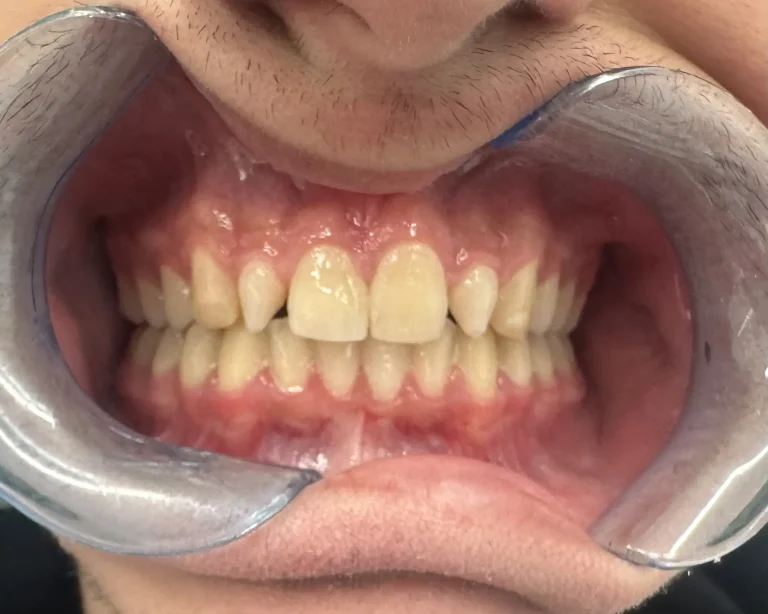
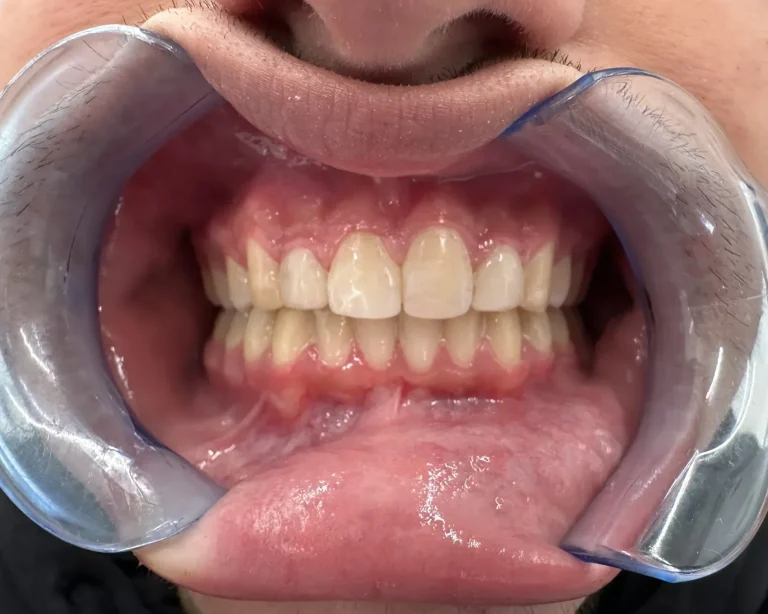
Cases
Everything You Need to Know
Frequently Asked Questions (FAQ)
Are no-prep veneers really completely reversible?
Composite no-prep veneers are typically removable — they can be polished off and the natural tooth returns to its original state. E.max no-prep veneers are near-reversible: because no enamel was removed, the tooth underneath is preserved, but the bonding resin layer may need gentle polishing if removal is ever needed. This is one of their biggest advantages over traditional veneers.
Do no-prep veneers look natural?
Yes — when properly designed. Modern composite resins and E.max porcelain both mimic natural enamel translucency beautifully. The key is the dentist’s skill in colour selection, shape design and layering. At Dentistar, we use digital previews and mock-ups so you can see the result before committing.
How much do they cost in Cyprus?
Composite no-prep veneers typically cost 40–60% less than E.max. The exact price depends on the number of teeth being treated. At Dentistar we provide a clear quote after the smile design consultation — and you can often start with composite as a test before later upgrading to E.max.
Will my teeth look or feel bulky?
There’s a slight increase in fullness because no enamel was removed — but in most cases this is barely noticeable and adapts within days. For patients with already prominent front teeth, traditional minimal-prep veneers may give a more natural feel; we’ll guide you honestly during your consultation.
How long do they last?
Composite no-prep veneers: 4–7 years on average, easily repaired or refreshed. E.max no-prep veneers: 10–15 years or more with proper care. Lifespan depends on oral hygiene, diet, and habits like grinding (where a night guard is recommended).
Is the procedure painful?
Not at all. Because we don’t remove any enamel, no anaesthesia is needed and there’s no post-procedure sensitivity. Patients are often surprised at how comfortable and easy the appointment is.
Can I go straight to E.max, or should I start with composite?
Many patients choose composite first as a “test drive” — it’s faster, more affordable, and lets you experience the look before committing to porcelain. After 1–2 years of wearing composite veneers and refining what you love about your smile, you can upgrade to E.max with confidence. Equally, if you already know exactly what you want, going straight to E.max saves you the intermediate step.
Ready to Book Your Appointment?
Contact us today to schedule your visit and take the first step toward a healthier smile.