


- Home /
- Root Canals /
- Endodontic Retreatment
Endodontic Retreatment
What is Endodontic Retreatment?
Endodontic retreatment (also known as re-endo or root canal retreatment) is a second chance for a tooth that has had a previous root canal but shows recurrent symptoms or infection. At Dentistar Dental Clinic in Strovolos, Nicosia, we perform endodontic retreatment with modern equipment and a high success rate — saving teeth that would otherwise be heading for extraction.
Why Can a Root Canal Treatment Fail?
- Even with proper technique, a root canal treatment can fail in 5–15% of cases. The most common causes:
- Undiscovered or anatomically complex root canals
- Incomplete cleaning & disinfection at the initial treatment
- Incomplete sealing of the root canals (gaps allowing bacterial entry)
- Delayed final restoration after the root canal
- A broken filling / crown that allowed re-infection
- New decay around the restoration
- A broken instrument inside the root canal (rare but possible)
- Root fracture
When Endodontic Retreatment Is Needed
- Symptoms suggesting failure:
- Recurrence of pain, months or years after the initial root canal
- Pain or sensitivity on chewing
- Swelling on the gums around the tooth
- Sinus tract (small hole on the gums with pus)
- Persistent bad taste in the mouth
- Progressive darkening of the tooth
- Radiographic findings:
- Persistent or new “shadow” (lesion) around the root
- Signs of incomplete root canal sealing
- Untreated root canals
Treatment Options — What We Do
1) Non-surgical Retreatment (Classic Re-endo)
- This is the first option. The procedure involves:
- Removing the old restoration (crown, filling)
- Removing the old sealing material (gutta-percha) from the root canals
- Searching for additional canals that may have been missed initially
- New extensive cleaning & disinfection
- New sealing with modern bioceramic materials
- New final restoration
- Usually 2–3 appointments are needed over 2–4 weeks.
2) Endodontic Surgery (Apicoectomy)
- Selected when:
- Non-surgical retreatment isn't feasible (e.g. due to embedded posts or impenetrable fillings)
- Re-endo has already been performed and the infection persists
- There's a broken instrument that can't be removed
- An anatomical anomaly prevents proper treatment from the coronal access
- We surgically remove the tip of the root along with the infected tissue and seal the root canal “in reverse” with a bioceramic material.
Success Rates
- Non-surgical retreatment (re-endo): 70–85% success
- Endodontic surgery (apicoectomy): 80–90% success
- Combination: even higher rates
- With the right approach, a tooth can be saved even after a failed first treatment.
Retreatment or Implant? — What to Choose
This is one of the most common decisions in modern dentistry. At Dentistar, for each patient we consider:
- In favour of retreatment:
- You keep your natural tooth (always the ideal option)
- No need for implant surgery
- Shorter overall time (no 3–4 months osseointegration)
- Usually a more affordable solution
- Preserves natural sensations (periodontal ligament)
- In favour of an implant:
- When the tooth has suffered a root fracture or is unrestorable
- When previous re-endo has already failed
- When the periodontal health around the tooth is poor
- When there isn't enough healthy tooth structure for a crown
- At Dentistar — as a principle — we always try first to save the natural tooth. The implant is an excellent solution, but it remains the alternative when we can't preserve the natural tooth.
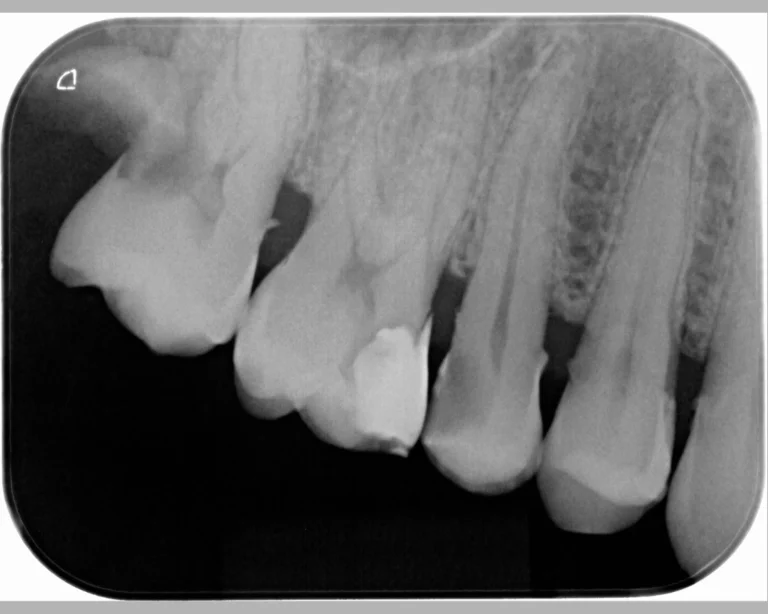
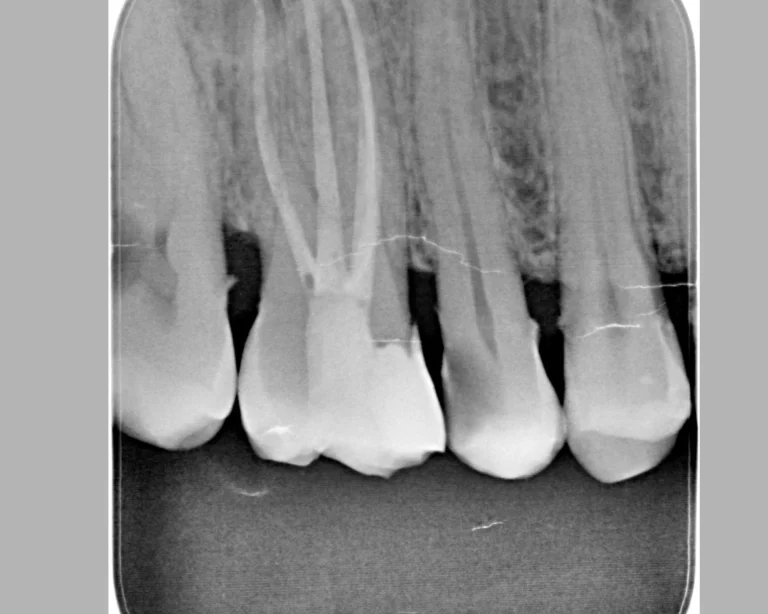
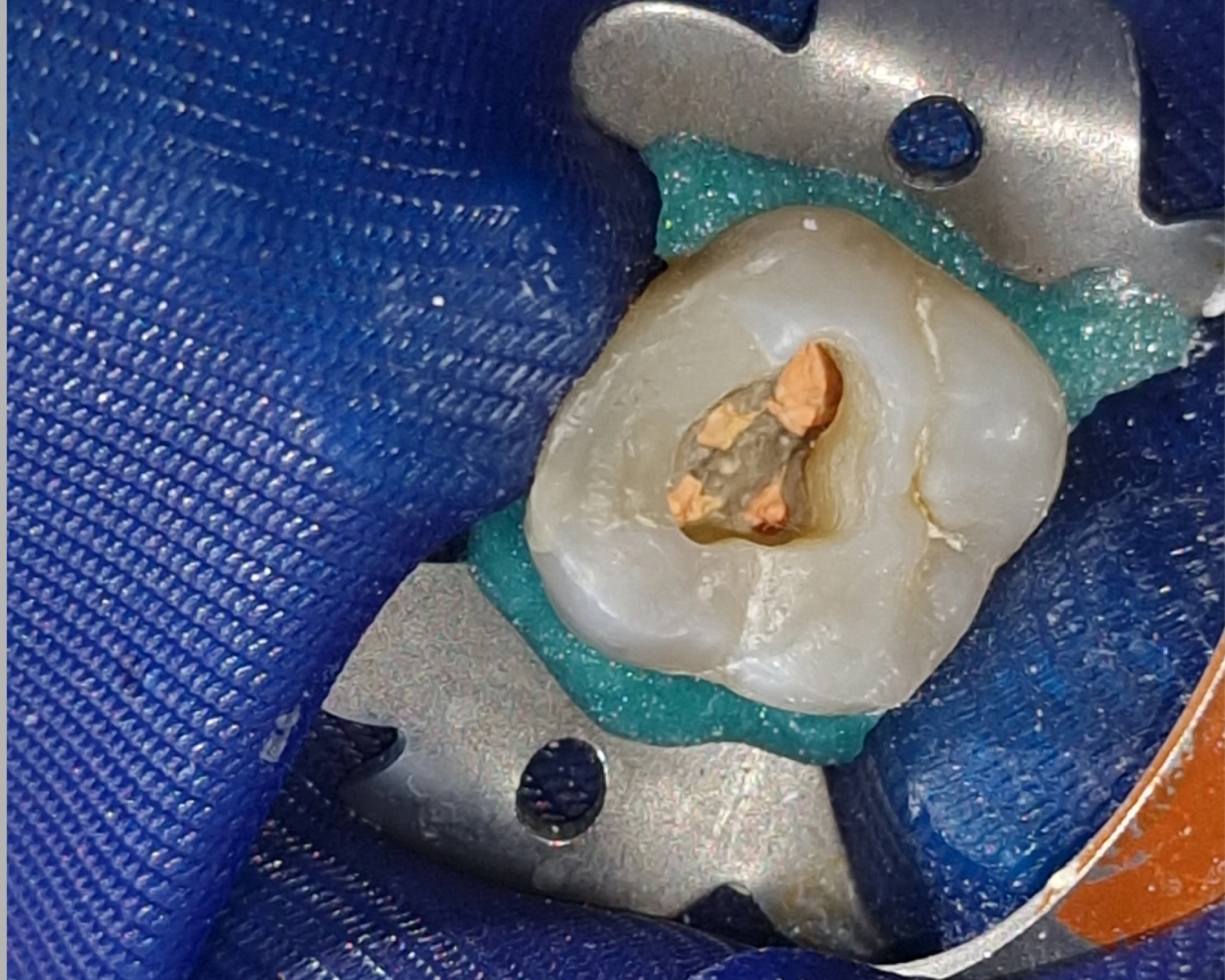
Cases
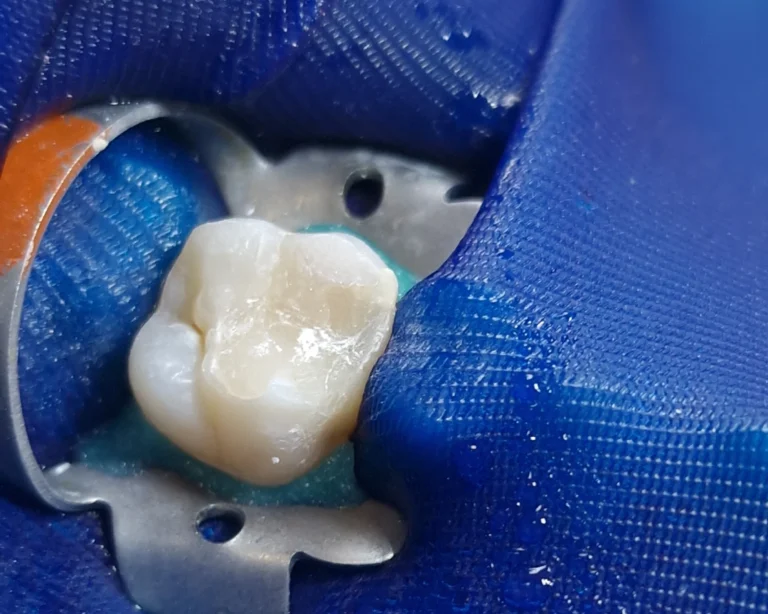
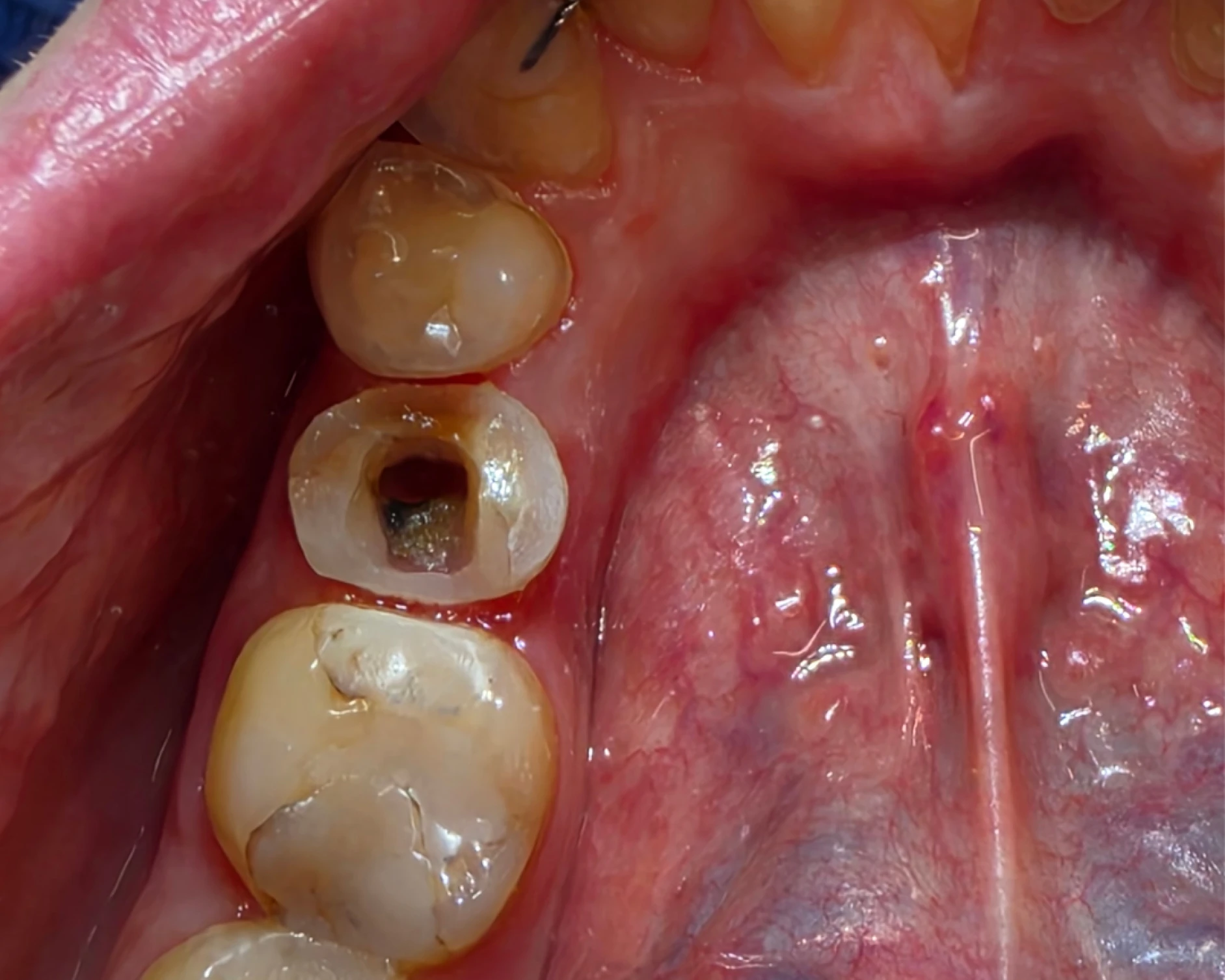
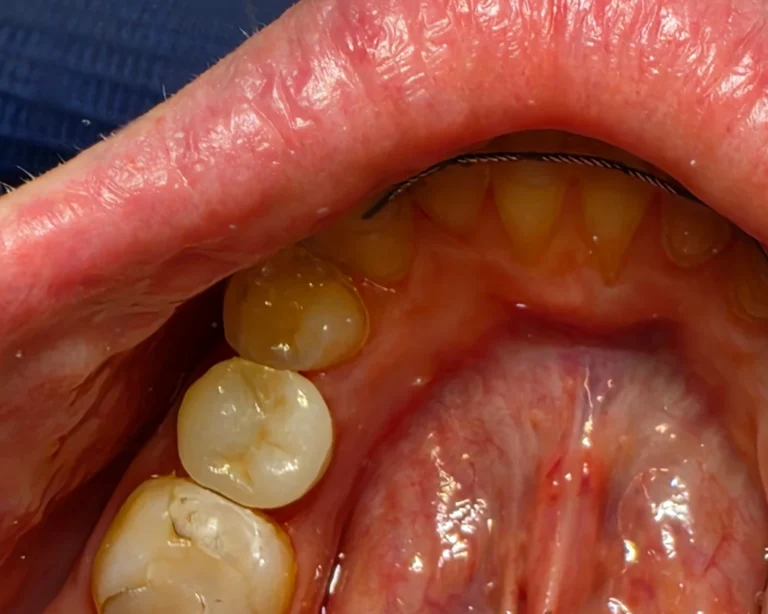
Everything You Need to Know
Frequently Asked Questions (FAQ)
Why did my first root canal fail?
Usually due to complex root canal anatomy, an additional canal that wasn’t found, or new infection from leakage in the sealing. In most cases it’s no one’s fault — some teeth (especially molars) simply have particularly complex roots.
How long does retreatment take?
Usually 2–3 appointments of 60–120 minutes, over 2–4 weeks. It’s more time-consuming than the initial root canal because it requires removing old material before the new treatment.
Is it painless?
Yes. With modern local anaesthesia, the procedure is completely painless. There may be mild sensitivity for 2–4 days afterwards.
What is the chance of success?
With modern equipment, retreatment success exceeds 70–85%. In selected cases, endodontic surgery (apicoectomy) provides an additional 80–90% success.
How much does it cost compared to the initial treatment?
Usually 20–50% more than an initial root canal, due to the extra work (removing old material). It remains more affordable than extraction + implant.
Do I also need to replace the crown?
Usually yes, if the existing crown needs to be removed for access to the root canals. In some cases, the same crown can be repositioned if it’s in good condition.
When will I know if treatment was successful?
Symptoms usually subside within a few weeks. Radiographic confirmation of healing takes 6 –12 months — that’s why we recall you for re-evaluation.
Ready to Book Your Appointment?
Contact us today to schedule your visit and take the first step toward a healthier smile.